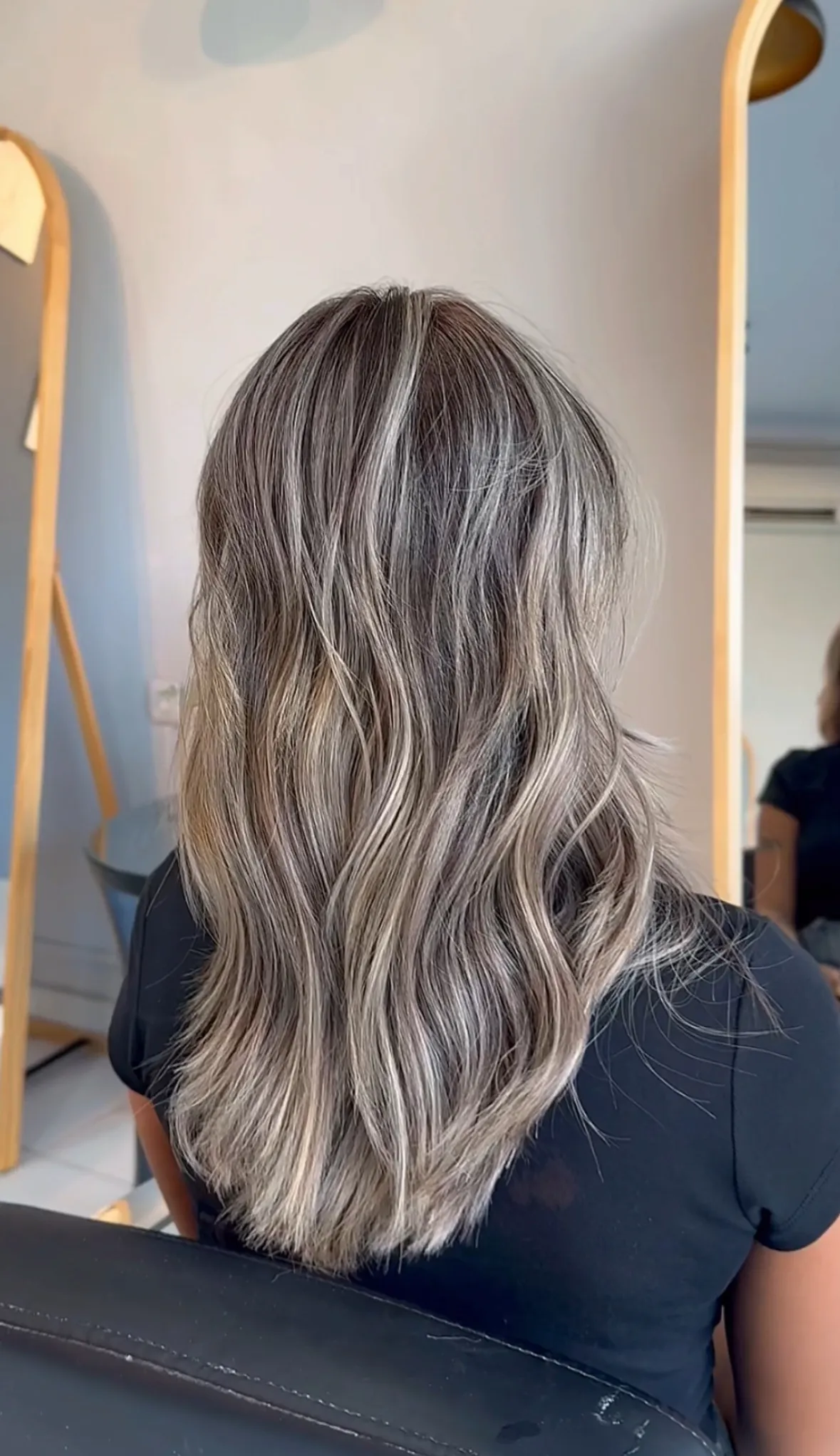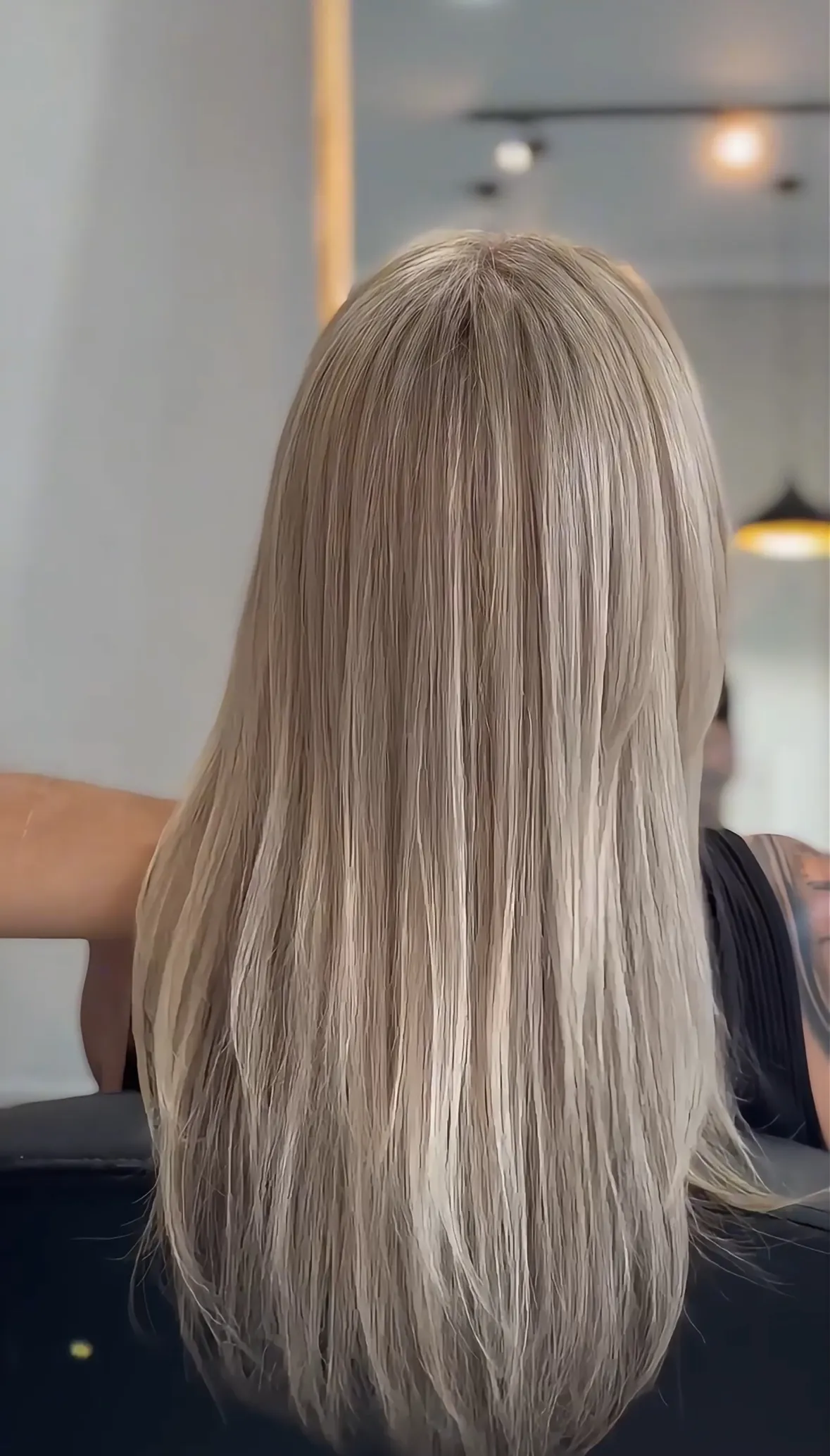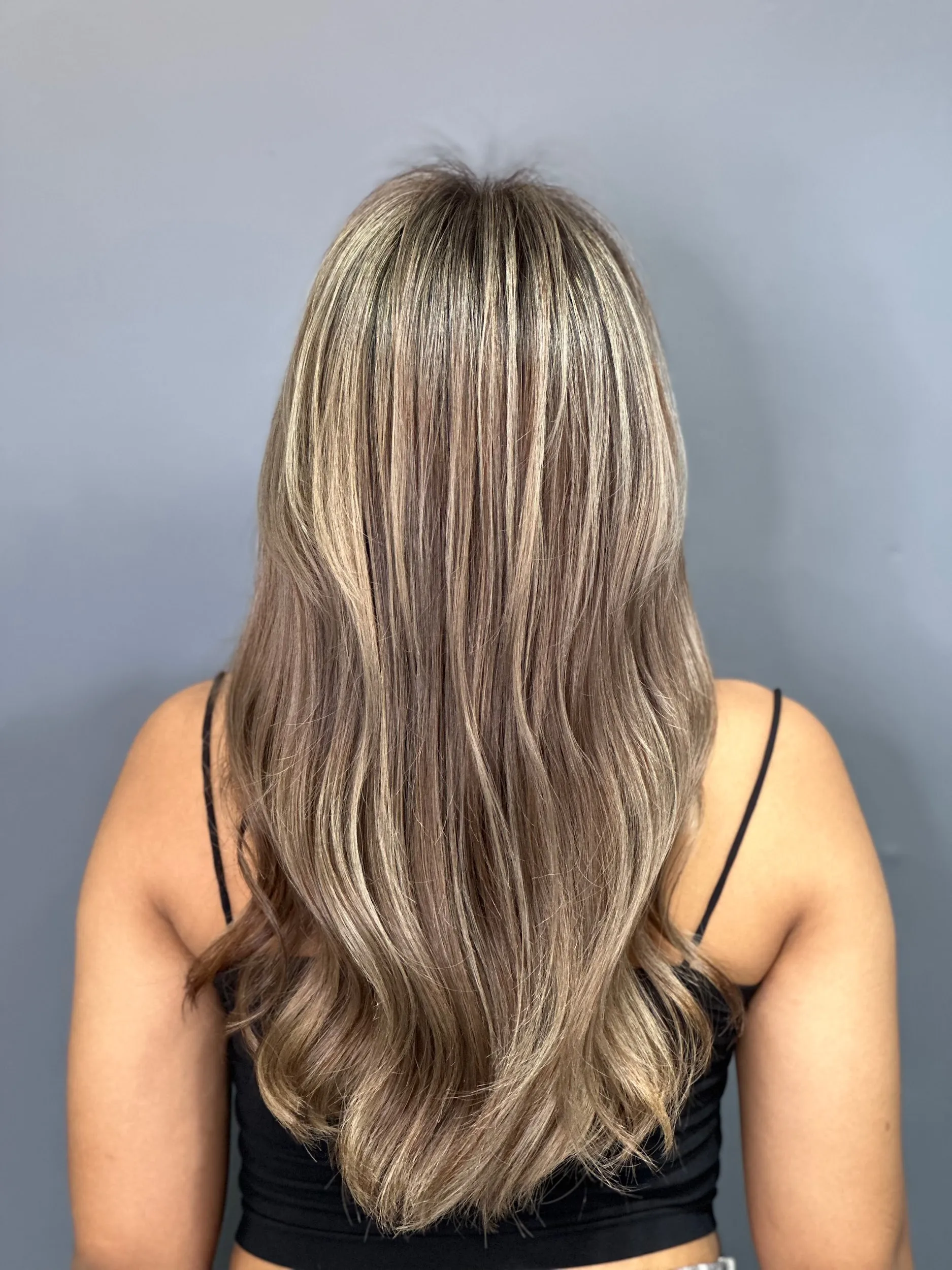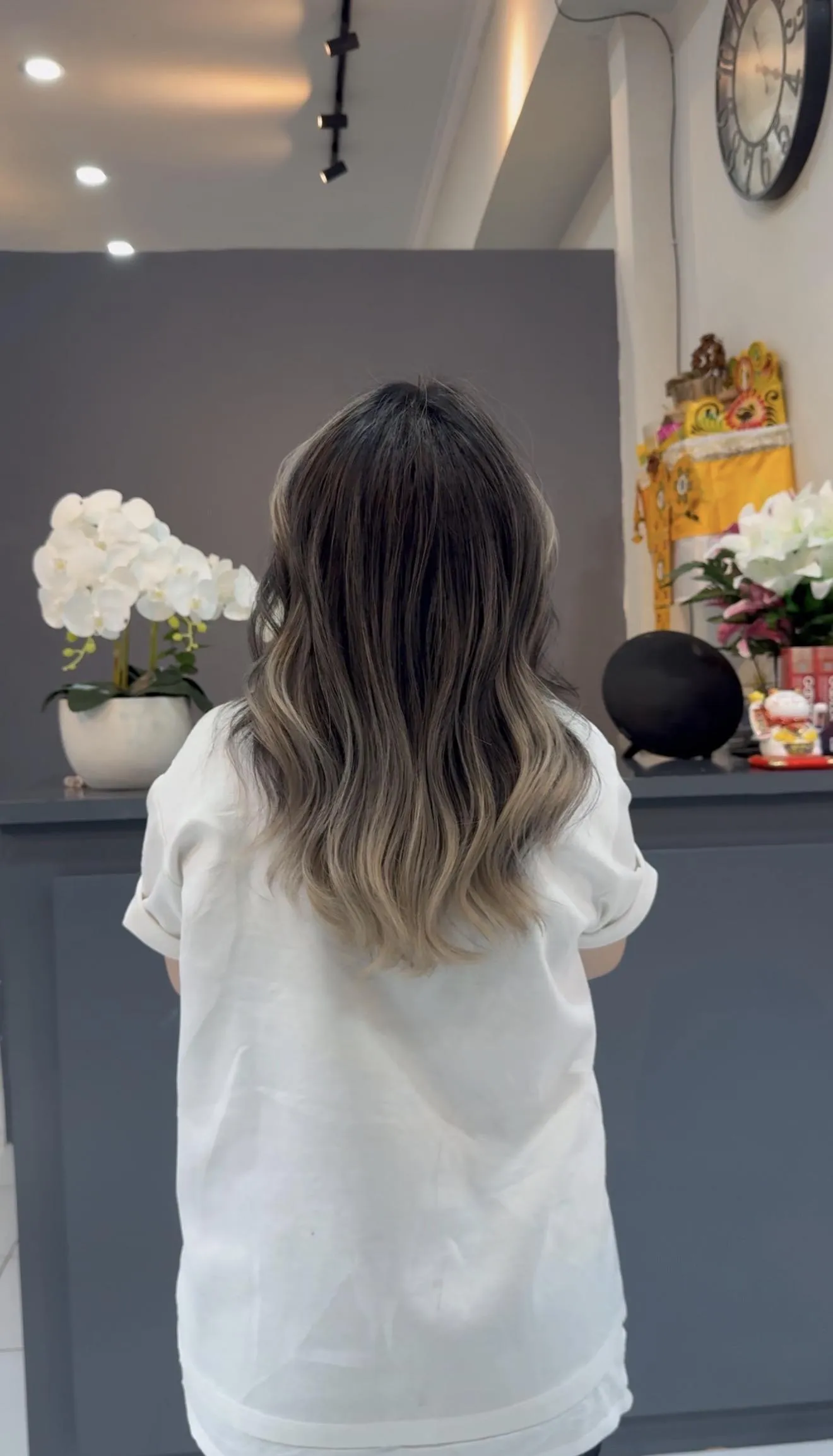
Airtouch is one of those techniques that sounds almost too simple when you describe it — and then you see the result. What a hair dryer actually does to a section of hair, when used with precision, is what separates Airtouch from every colour method that came before it.
What Airtouch Actually Is
The core idea is mechanical, not chemical. Before any colour is applied to a section of hair, the colourist picks up that section and directs a hair dryer at it from below. The airflow blows the shorter, finer, weaker hairs away from the section — strands that are broken, growing in from the root, or simply too short to hold colour cleanly. What remains is the longer, structurally intact hair.
Colour is then applied only to those longer strands, which are wrapped in foil to process.
The result is a colour application that is physically selective in a way no brush technique can replicate. You are not deciding by eye which strands to paint and which to leave — the physics of airflow is doing that separation for you. Short hairs at the root zone blend naturally into the coloured lengths because they were never touched. The transition is not blended in; it is built in from the start.
This is why Airtouch produces softer results than foil highlights and more controlled results than freehand balayage. It sits at a precise point between the two.
The Physics of Why It Works
Hair at any given section is not uniform. You have long strands that have been growing for years and short strands that are anywhere from a few weeks to a few months old. You also have hairs at different structural integrity levels — some healthy throughout their length, others damaged or broken partway down.
When a colourist applies lightener to an entire section without separating it, those shorter hairs inevitably catch colour. They lift faster than the longer strands, they are harder to control at the root zone, and they are the primary reason foil highlights can produce visible demarcation lines where the colour appears to begin and end sharply.
Airtouch eliminates that problem. The blow dryer creates a laminar airflow through the section that preferentially lifts shorter, lighter hairs while longer, heavier hairs fall back down. The separation is not perfect — nothing in hair is perfectly uniform — but it is remarkably consistent. What gets coloured is a selected subset of each section, weighted toward the strands that will carry colour cleanly and grow out gracefully.
The foils used after separation serve a different purpose than in traditional highlighting. They are not imposing structure on the colour placement — that has already been done by the airflow. The foils are simply holding the selected strands in place while the lightener processes.
Airtouch vs Balayage vs Highlights
These three techniques are often mentioned in the same breath, and they do sit in the same territory — all creating lighter colour through sections of natural hair. But they are solving the problem differently.
Highlights use foils and uniform sectioning. The colourist decides which strands to lift based on placement, and those strands are isolated and lightened with precision. The result is defined, structured brightness — you can see where the highlights are, and that visibility is part of the effect. High-contrast, clean, deliberate.
Balayage is freehand painting. No foils during application, no mechanical separation. The colourist paints colour directly onto the hair surface, feathering at the root and saturating toward the tip. The blending depends entirely on the painter's hand and eye. Beautiful when done well, but the result is only as seamless as the person holding the brush.
Airtouch adds a step that neither highlights nor balayage uses: the physical pre-sorting of the hair before colour is applied. This produces a transition zone at the root that is genuinely gradual — not just painted to look gradual. The shorter hairs that were blown away grow back in as uncoloured hair, which means new growth from the scalp blends into the coloured sections naturally rather than as a visible dark line.
For low-maintenance colour that stays soft as it grows out, Airtouch has no direct competition. When combined with highlights or root shadow in a combination colouring session, the result is the most complex and dimensional colour achievable in a single appointment.
Who Airtouch Works Best For
Airtouch is particularly effective on hair that has enough length for the technique to be meaningful — generally shoulder length or longer. The airflow separation requires a section of sufficient length that some strands will be blown clear and others will hold. Very short hair does not give the technique enough to work with.
It works across a wide range of textures. Straight hair shows the gradient most cleanly. Wavy and curly hair benefits from the softer transitions because curl patterns naturally obscure harsh lines, and Airtouch leans into that rather than fighting it.
The technique is most impactful on darker natural bases where the difference between coloured and uncoloured hair is significant — levels four through seven, roughly. On already-light hair, the separation is less critical because regrowth contrast is low anyway.
If you want colour that looks like you were born with it, and you want appointments you can stretch to every four or five months without looking like you have neglected your hair, Airtouch is the answer. It is also well-suited to anyone new to lightening their hair who wants to start without a dramatic shift — the selectivity of the technique means you can build brightness gradually over sessions rather than committing to full saturation immediately.
The Process at Rose Petal
Every Airtouch appointment begins with a full consultation. The colourist examines your hair's natural level, texture, density, and any prior chemical history. If you have had a keratin treatment or previous colour, this is the time to discuss it — not because those things are necessarily problems, but because they change how the hair responds and the formulation needs to account for them.
The sectioning comes next. Hair is divided systematically — typically working from the nape upward — with each section prepared before any colour is mixed. This is where the technique becomes visible: the colourist holding each section taut while directing the dryer through it, the shorter hairs drifting away, the longer strands falling back clean.
Colour is applied to the selected strands and foiled. Different sections may use different formulations depending on the existing base and desired end result. Mid-lengths may use a different strength developer than the tips. The goal is even lift across all the coloured strands, not maximum lift everywhere.
Processing takes between 30 and 50 minutes, monitored throughout. After rinsing, toning refines the final shade. The toner is as important as the lightening — it is what shifts the lifted hair from yellow-orange toward the cool ash, warm honey, or soft caramel that was the target all along.
A full Airtouch appointment runs three to four hours. That is a minimum for good work, not a rough estimate. The technique cannot be abbreviated without compromising the precision that justifies using it.
Aftercare in Bali's Climate
Bali's environment is genuinely harder on colour-treated hair than most places. Humidity, UV radiation, salt water, and chlorine from pools work against any lightening service — they accelerate fading, alter tones, and stress already-processed hair. Airtouch clients need to be aware of this, especially if they are spending extended time in Uluwatu.
The fundamentals apply here as they do everywhere: sulphate-free shampoo, conditioner formulated for colour-treated hair, and weekly deep conditioning. But Bali adds some specifics. UV protection is non-negotiable — the light here is direct and strong even on overcast days. Use a UV-protective hair mist or oil when you are outside for extended periods.
Salt water is a lipid stripper. It pulls the natural oils from the hair shaft that keep the cuticle lying flat and the colour locked in. Rinse your hair with fresh water before swimming — saturated hair absorbs less salt or chlorine — and rinse thoroughly after. Do not let salt water dry in your hair on the beach.
For colour-treated hair in Bali's heat and humidity, a full breakdown of the four main environmental threats and how to manage them is in the hair care in Bali guide. If you are living here or planning an extended stay, read that before your colour appointment, not after.
Toner will fade before the lightened hair does — typically by six to eight weeks. Scheduling a toner refresh rather than waiting for a full re-colour is both more economical and better for the hair. Your colourist can advise on timing based on your specific result and how you are managing the environment.
Single process colour or a combination session can be booked at the same time as a toner refresh if the overall look needs adjustment.
If you are curious how Airtouch fits into a broader beauty routine in Bali — across hair, skin, and nails — the Bali beauty guide covers the full picture.
Rose Petal is a beauty center on Jalan Labuansait in Uluwatu offering Airtouch, balayage, highlights, and other advanced hair colouring techniques daily from 10 AM to 7 PM — with a lounge bar, sunset terrace, and co-working space. To book your appointment, visit rosepetalbali.com or message us on WhatsApp.
Beauty, refined.