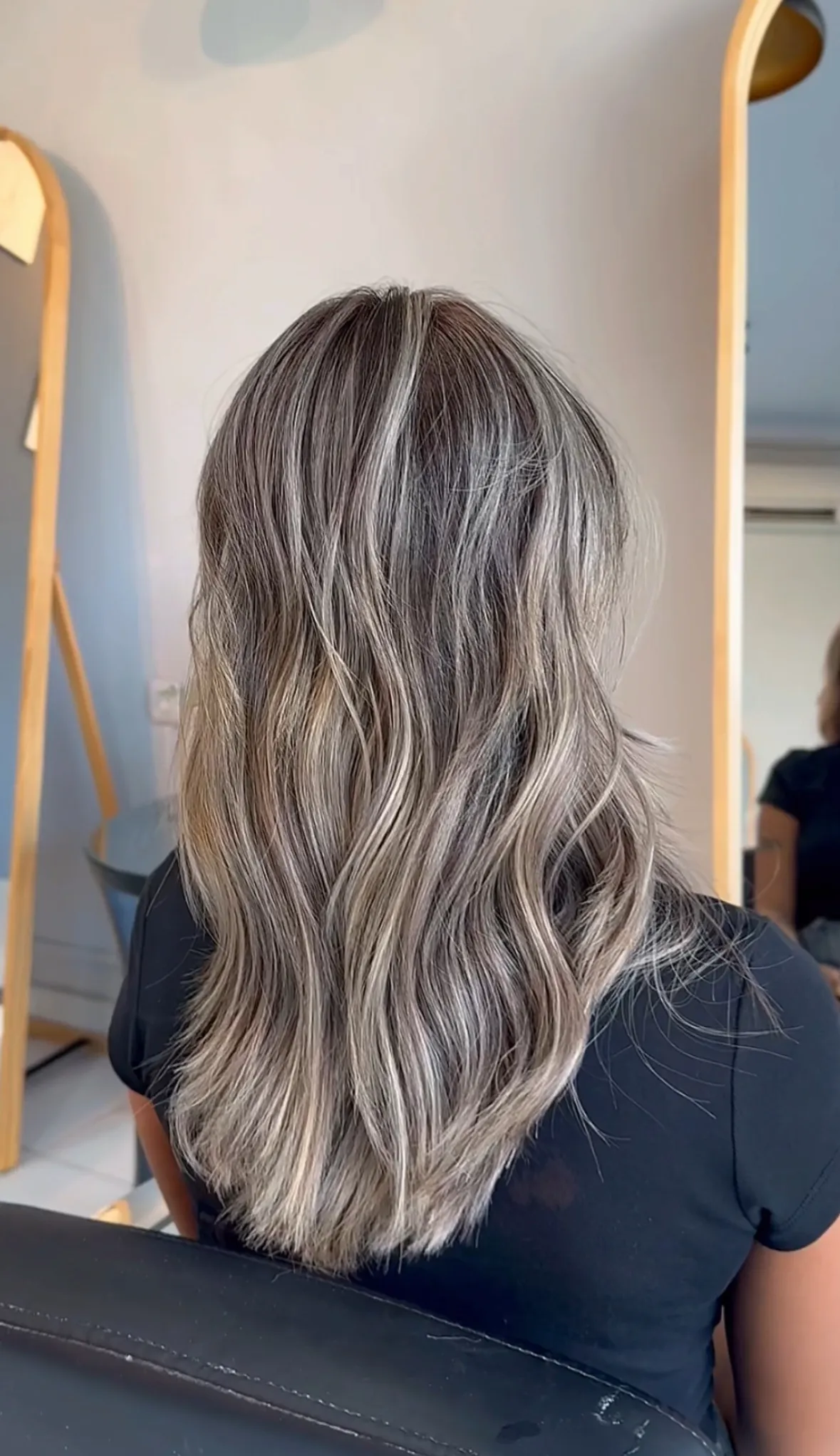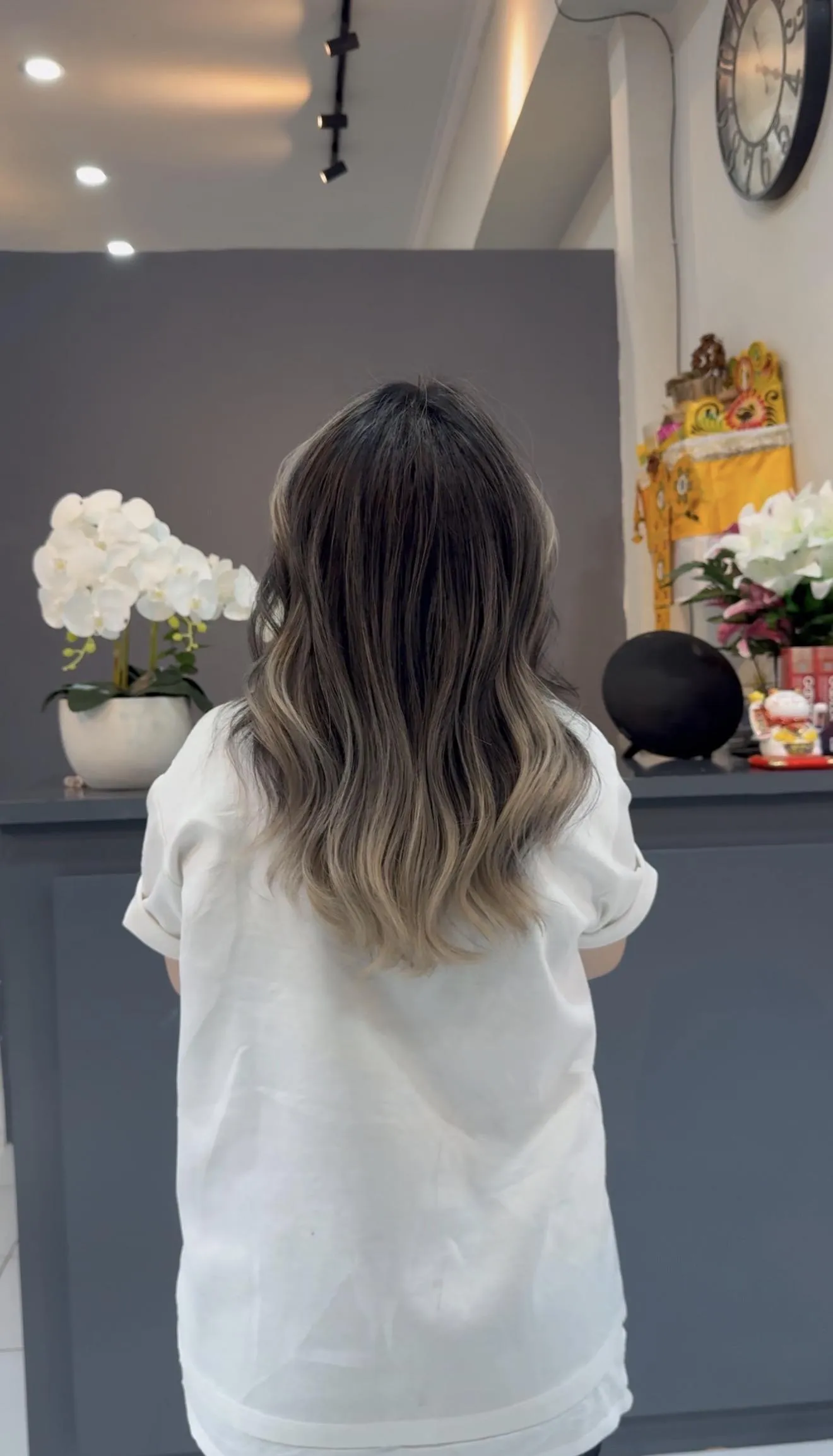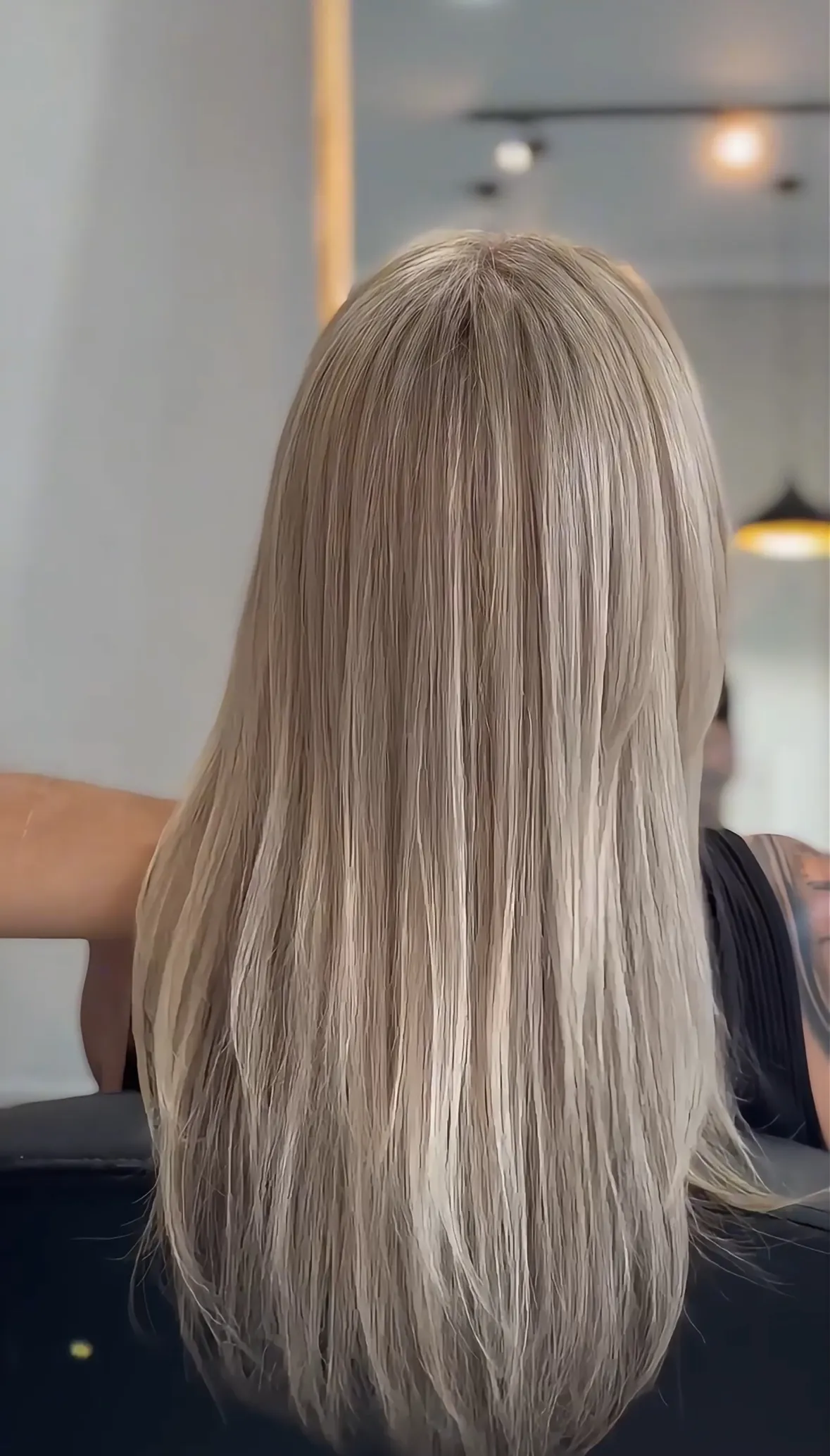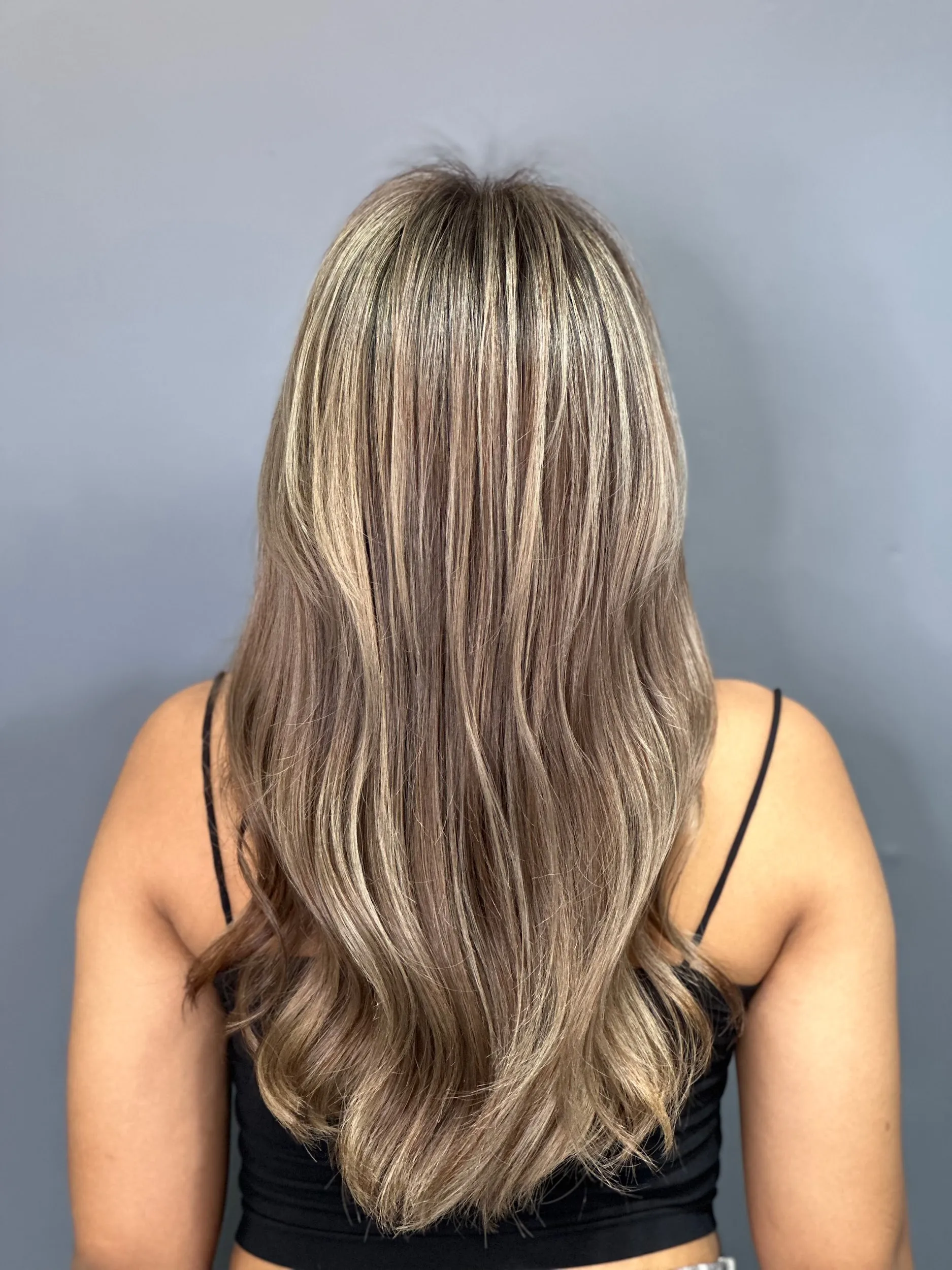
Highlights are the most customisable colour service in the salon. The same technique applied differently produces everything from barely-there brightness to high-contrast drama — and understanding why gives you the language to ask for exactly what you want.
What Highlights Are
Highlighting is the isolation and lightening of selected strands within your natural hair. Unlike balayage — which is painted freehand onto hair surfaces — highlights use foils to section off specific strands, apply lightener precisely, and control the degree of lift with accuracy.
The foil serves two purposes. It prevents the lightener on the selected strands from bleeding onto the surrounding hair, giving the colourist clean edges between lightened and natural sections. It also reflects heat back into the strand, which accelerates and intensifies the lift. The result is defined brightness — you can see distinctly where the lightened strands are, and in most highlight styles, that visibility is part of the design.
What makes highlights endlessly variable is placement. The same foil technique applied in different strand thicknesses, at different heights from the root, with different density across the head, and with different placement patterns relative to the face produces wildly different effects. Two people can walk out of the same salon having received "highlights" and look nothing alike — because the colourist made different decisions about each of those variables.
Types of Highlights
Classic Foil Highlights
The standard: medium-thickness sections isolated in foil, applied from root to tip or from a set height down. Classic highlights create defined contrast — you can see the individual lightened strands, and they add clear dimension to the overall colour. These are what most people mean when they say highlights, and they remain the most popular variant because the result is bright, crisp, and holds well over time.
The degree of contrast depends on how far apart the lightened and natural sections are in tone. A client on a level five natural base with level nine highlights will have high contrast. A client lifting only two or three levels from their natural base will see a much softer differentiation. Your colourist works out that target with you in consultation.
Babylights
Babylights use sections so fine they are sometimes almost individual strands. The goal is to approximate what sun-lightened children's hair looks like — a soft, diffuse brightness rather than distinct streaks. No individual strand stands out; instead, the overall tone is lifted by a few shades through sheer volume of fine sections placed densely through the hair.
This is the most time-intensive highlight technique because of the number of foils required. A full babylight application can involve two to three times as many sections as classic highlights, which is reflected in appointment time. The payoff is colour that reads as genuinely natural from a distance and up close.
Babylights grow out with the least visible demarcation. Because each lightened strand is so fine, the root shadow as new growth comes in blends into the lightened hair rather than appearing as a distinct line. Maintenance intervals can stretch to four or five months comfortably.
Chunky Highlights
Thicker sections, bolder contrast. Chunky highlights were the dominant aesthetic of a particular era, and they have come back in updated form — less uniform, more selectively placed than the original, but still deliberate in their visibility.
They work best when the placement is considered: concentrated in specific zones rather than uniform across the entire head, and often combined with lowlights in between the lightened sections to create depth alongside the brightness. On their own, without that counterweight, chunky highlights can look flat rather than dimensional.
Partial Highlights
Applied to a portion of the head rather than throughout. Most commonly this means the top section only — the hair that falls over and around the face — or a face-frame application that runs sections specifically to bracket the face and pick up the light there.
Partial highlights are the entry point for anyone who wants to brighten their look without committing to full-head lightening, and they are also the most maintenance-friendly option. Less colour overall means less chemical impact on the hair and a smaller section to manage as it grows out.
The Science of Placement: Why It Changes Everything
The colour effect you see is not just about how light or dark the highlights are — it is about how they interact with the hair's movement and structure. Two decisions govern most of the visual result: strand thickness and placement position.
Strand thickness determines whether you see individual highlights or a general brightening. Fine strands blend into the overall tone; thick strands read as distinct elements. This is not better or worse — it depends entirely on what you are trying to achieve.
Placement position controls where the eye goes when it looks at your hair. Highlights concentrated at the crown and top sections draw attention upward and add the illusion of volume. Face-framing sections — placed at the temples, running down the sides — catch light when you move your head and draw attention toward your features. Nape highlights have almost no visual effect from the front; they exist to make the under-layers interesting when the hair is up or when it moves.
Density — how many foils go into a section of head — controls the overall brightness. Dense application reads as a significant lift in tone across the whole head. Sparse application reads as selective accents.
The colourist who understands all three variables can produce a result calibrated precisely to your hair and face. The conversation in consultation matters here more than in almost any other colour service, because it determines the spatial decisions that drive the visual outcome.
Highlights vs Other Techniques
Highlights produce the most defined, controlled brightness of any highlighting family technique. If you want clean, distinct contrast — hair that is visibly brighter in clear sections — highlights deliver that better than freehand balayage or Airtouch.
If you want softer transitions and more gradual blending, Airtouch is the more appropriate technique — the airflow separation produces a root blend that foils cannot replicate. Balayage sits between them: more blended than classic highlights, more structured than Airtouch.
For the most dimensional result — brightness and depth working together in a single appointment — a combination colouring session that pairs highlights with lowlights or a root shadow gives you what no single technique achieves alone.
What to Expect During the Appointment
A highlights appointment starts with a full consultation: your colourist examines your natural base level, previous colour history, and what you are actually asking for. At this stage, bring reference images. "Bright" and "natural" mean different things to different people, and images cut through the ambiguity immediately.
After consultation, the colourist sections the hair systematically and works through each foil. For classic highlights, this typically takes 60 to 90 minutes for a full head. Babylights take longer — up to two hours or more of pure application time. Partial highlights are the fastest, often 30 to 45 minutes for the application alone.
After the foils are in, the hair processes. Your colourist will monitor the lift through the foils and adjust timing based on what they see. Different sections of your hair may lift at different rates, and a skilled colourist accounts for this rather than pulling everything at once.
After rinsing, toning adjusts the final shade. This is where the lifted yellow-orange is corrected to the target tone — whether that is a cool ash, a warm champagne, or something in between. Finishing and styling complete the appointment.
A full-head classic highlight service runs two to three hours. Babylights often run three to four. Budget the time accordingly.
Maintenance and Aftercare in Bali
Highlighted hair needs more care than natural hair, and Bali's environment adds pressure that more temperate climates do not. UV radiation fades and alters tone faster here. Salt water strips lipids from the cuticle. Chlorine is an oxidising agent that will shift the colour toward green in extreme exposure.
The foundation is always sulphate-free shampoo and colour-appropriate conditioner. A purple or blue toning shampoo used once a week counteracts any brassiness that develops between appointments. Deep conditioning masks should be used weekly, not occasionally.
For the full breakdown of how Bali's climate affects treated hair and what daily and weekly routines look like, see the hair care in Bali guide. It covers humidity, UV, salt, and chlorine specifically — everything that will work against your colour if you are not actively managing it.
Touch-up intervals depend on the type of highlight. Classic highlights with significant contrast need a root touch-up around the three-month mark. Babylights and partial applications can stretch to four or five months. If your only concern is tone and not root visibility, a standalone toner refresh buys additional time without adding more lightener to the hair.
Maintaining highlighted hair in Bali is straightforward once the routine is established. It requires consistency more than complexity. For anything that goes beyond routine care — colour correction, restoration of over-processed hair — a consultation appointment before booking a service is the right first step.
For how highlights fit into the broader landscape of beauty services available in Bali, the Bali beauty guide covers the full range in one place.
Rose Petal is a beauty center on Jalan Labuansait in Uluwatu offering highlights, balayage, Airtouch, and full colour services daily from 10 AM to 7 PM — with a lounge bar, sunset terrace, and co-working space. To book your appointment, visit rosepetalbali.com or message us on WhatsApp.
Beauty, refined.